
Quality has always mattered in RAIN RFID. But for much of the industry’s history, it has been difficult to talk about quality in a way that is both precise and widely understood.
Today, the RAIN Alliance’s Manufacturing Quality Certification Guideline and Manufacturing Quality Guideline Use Case Scenarios help change that, by giving manufacturers and end users a shared, practical language for defining what “good quality” really means, across a wide range of applications.
The Quality Question
What does “good quality” mean for a RAIN RFID tag?
In practice, quality has often been shorthand for trust: trust that every tag will perform as expected, at scale, in real operational environments – no matter the hour, day, week or month of its manufacture. Quality is about predictability and consistency; that all instances of the same tag will function the same way, reliably, over time and meet defined specifications across production.
But as RAIN RFID has expanded into more industries, use cases, and operating environments, a fundamental challenge has emerged: How do we talk about quality when requirements vary so widely across different applications?
Quality Is Contextual, Not Universal
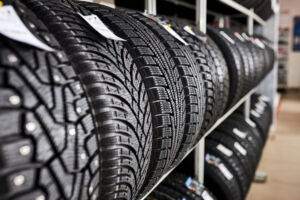 A key insight reflected in the RAIN Manufacturing Quality Guidelines is that defined quality requirements are inherently application specific.
Consider a RAIN tag embedded in a tire versus a retail hangtag. The tire tag must survive heat, pressure, and mechanical stress over years of use. The fashion hangtag only needs to perform reliably through a few months of distribution and retail display. Both need to be produced with a repeatable quality, but suggesting they need the same quality would be like insisting a bicycle and a commercial airliner meet identical safety standards because they both transport people.
Two Ends of the Spectrum
These two examples, retail fashion and tire tracking, reflect just how vast the RAIN RFID tagging spectrum can be.
The Use Case Scenarios document makes these differences explicit by defining quality across multiple dimensions:
- RF performance and variation
- Data retention and reliability
- Mechanical durability
- Environmental resistance
- Documentation and process rigor
- Compliance with special process requirements
Rather than treating quality as pass/fail, the guidelines define graded performance levels that can be combined to match real-world needs. A retail fashion tag requires one profile: moderate environmental demands, shorter lifecycle. A tire tag requires another: extreme durability, long-term data retention, harsh environmental tolerance.
Neither is “higher” or “lower” quality. Each is fit for purpose.
Without a common framework for articulating these differences, manufacturers and end users talk past each other. The guidelines provide the vocabulary to turn vague quality conversations into specific, measurable requirements, which is exactly what both sides need.
For Manufacturers: Is Your Process Good?
The Manufacturing Quality Guideline provides manufacturers with exactly what the industry needs; a comprehensive framework for establishing, documenting, and proving manufacturing quality.
The guideline defines best practices for manufacturing quality, including:
- Documented production processes
- Inline and offline testing methods
- Traceability and change control
- Acceptance criteria and defect handling
- Ongoing monitoring and continuous improvement
At its core, the guideline addresses a fundamental question: Is your manufacturing process capable of reliably producing tags that meet a defined quality specification?
Manufacturers can use the guideline as:
- A self-assessment tool to understand current capabilities
- A framework for self-certification
- Or a basis for third-party certification, should they choose
In all cases, the emphasis is on transparency, repeatability, and documented evidence, not marketing claims.
For End Users: What Quality Do You Actually Need?
 For end users, the challenge is often not whether quality matters—but how to specify it clearly.
Many organizations struggle to translate operational needs into measurable requirements. The Use Case Scenarios document is designed to be a translation tool: How do we turn our operational needs into measurable requirements we can communicate to suppliers?
It provides detailed examples across six industries—retail, logistics, healthcare, automotive, aerospace, and food & perishables—showing how quality requirements vary dramatically based on application. For an automotive tire tag versus a luggage tracking tag versus a pharmaceutical traceability tag, what actually needs to be different?
The document allows end users to:
- Identify scenarios similar to their own
- Understand which quality dimensions matter most
- Adjust requirements up or down based on risk, lifecycle, and environment
This approach helps avoid two common pitfalls:
- Over-specifying, which can increase cost and limit supplier options
- Under-specifying, which can lead to failures, rework, or deployment delays
The result is clearer communication and better alignment with manufacturers from the outset.
From Vague to Specific, Together
Historically, many quality conversations sounded like this:
- “We need high-quality tags.”
- “We supply high-quality tags.”
The RAIN Manufacturing Quality Guidelines help move the industry toward something far more actionable: clearly defined quality dimensions, measurable comparable criteria, and a shared vocabulary that works across applications, manufacturing processes, and operational realities.
These tools provide a comprehensive, open framework for discussing and documenting quality; whether you’re tagging tires, tracking pharmaceuticals, or managing retail inventory. They enable manufacturers to differentiate themselves through documented capabilities and help end users specify exactly what they need with confidence.
With projections to ship more than 100 billion RAIN tags per annum in 2028, having this common language for quality comes at exactly the right time. As RAIN technology continues to scale and expand into new markets, these guidelines help ensure that quality remains not just assumed, but clearly defined, well understood, and consistently delivered.
Next Steps: Help Shape the Future of Quality
These guidelines represent an important milestone, but they’re not meant to be the final word. They’re a living framework designed to evolve through real-world adoption, testing, and community input.
We need your feedback.
Whether you’re a manufacturer implementing these processes, an end user applying these specifications, or anyone in between, your experience matters. As these guidelines are put into practice, we’ll learn what works, what needs refinement, and where additional clarity is needed.
How to get involved:
- Start using the guidelines. Apply them in your operations and see how they work in practice.
- Share your experience. What’s working? What’s challenging? Where do the guidelines need more detail or different approaches?
- Connect with the Working Group. Reach out to the Manufacturing Quality Working Group leaders with your feedback, questions, and suggestions.
The ultimate goal is to test and validate these guidelines across diverse applications and manufacturing environments. Without honest evaluation in practice, it will be difficult to confidently advance and scale them. Your adoption and feedback are essential to making that happen.
This is an opportunity to help shape how the industry talks about and delivers quality for years to come.