

Author: Matthieu Picon, CEO, Tageos
RAIN RFID has been transforming the way companies manage products, assets and information. What started out as a technology primarily focused on improving inventory accuracy and supply chain visibility has evolved into a key enablement platform for digital transformation. However, the industry now stands at a new turning point.
The next era of RAIN RFID will not be defined solely by knowing where products are located. Instead, it will be defined by a precise understanding of what products are, where they come from, what they are made of, how they should be used and what happens to them throughout their entire lifecycle, including the product recycling process. In other words, the future of RAIN RFID lies in the broader and more comprehensive digitization of products and its scale.
At Tageos, this vision has guided our strategy ever since the company was founded in Montpellier, France, in 2007. Our mission is simple yet ambitious: to enable product digitization for businesses and consumers today, and for generations to come. As one of the world’s leading manufacturers of inlays and tags, with more than 450 employees and global operations and offices across Europe, the US and Asia, not to mention an annual production capacity exceeding 12 billion units, we are well placed to shape the industry. We are convinced that the opportunities ahead of us are even greater than those that brought us this far.
The Industry is Entering a New Phase
The initial adoption of RFID technology was driven by the desire to improve operational efficiency. Retailers improved inventory accuracy and logistics companies increased transparency. Manufacturers optimized their workflows and healthcare organizations strengthened their asset management.
These benefits remain crucial. However, new factors are also emerging. For example, consumers are demanding greater product transparency, regulatory agencies are introducing new sustainability and product traceability requirements, brands are striving for stronger customer engagement and loyalty, and circular economy initiatives require better insight into product lifecycles.
In order to meet these expectations, digital identities at product level are necessary. RAIN RFID provides the perfect foundation for this, enabling the automated and scalable identification of billions of products in complex environments.
Digital Product Passports and the Future of Transparency
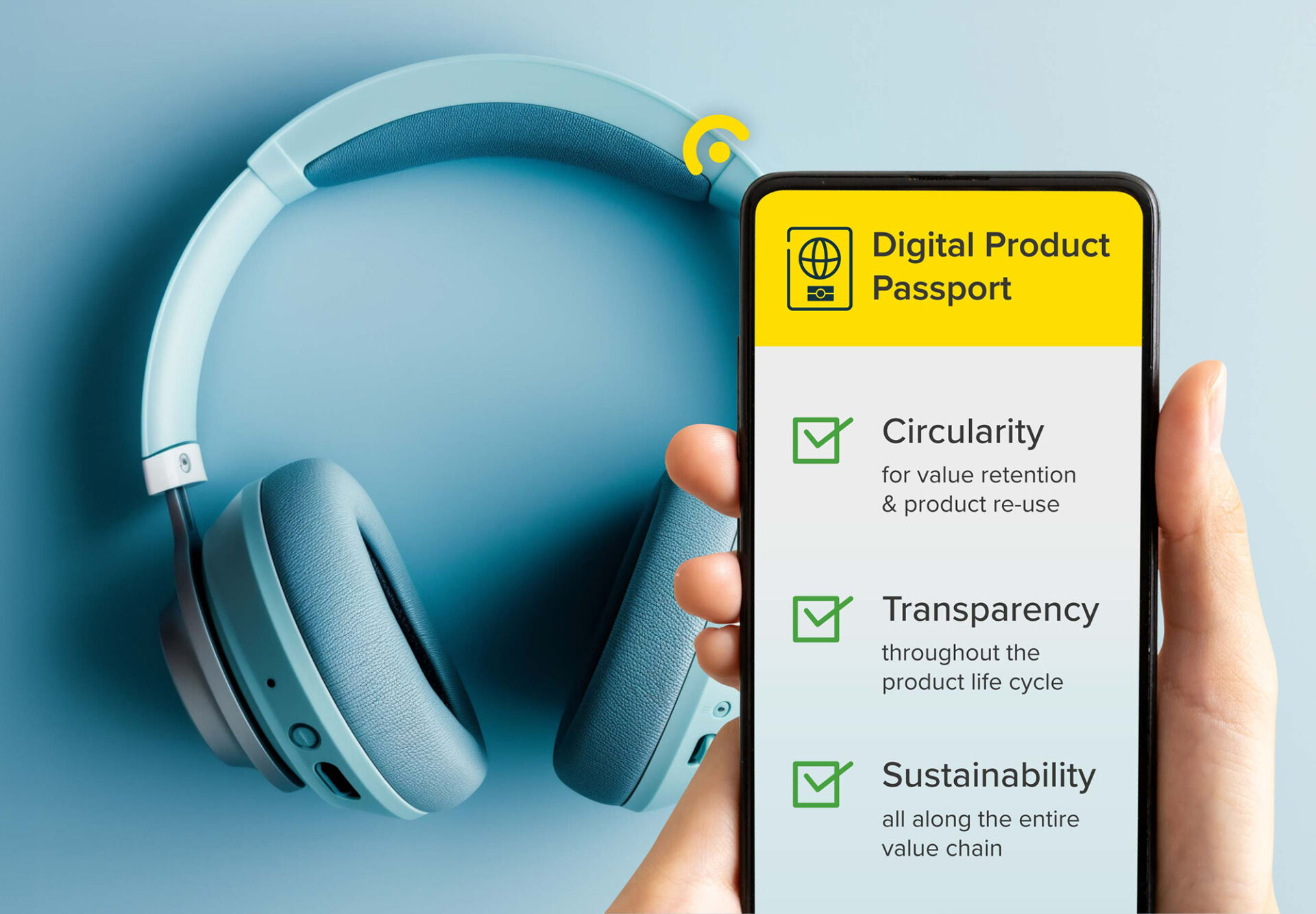
The introduction of Digital Product Passports (DPPs) is one of the most important developments that will shape the future of our industry. Governments, brands and industry associations across Europe and beyond are developing frameworks designed to ensure that products carry digital data records throughout their entire lifecycle. This data can cover manufacturing information, material composition, environmental impact, product authenticity, repair instructions and recycling guidelines.
RAIN RFID technology is one of the most scalable ways to bridge the gap between physical products and digital data records. The technology already supports automated identification on an industrial scale. As DPP initiatives mature, RFID will enable companies to link physical products to trusted digital ecosystems. This development represents a significant opportunity for the entire industry.
Sustainability Must Become a Design Principle
 In light of the steadily growing use and deployment volumes of RAIN RFID technology, the industry must address a critical question: How can we make RFID itself more sustainable?
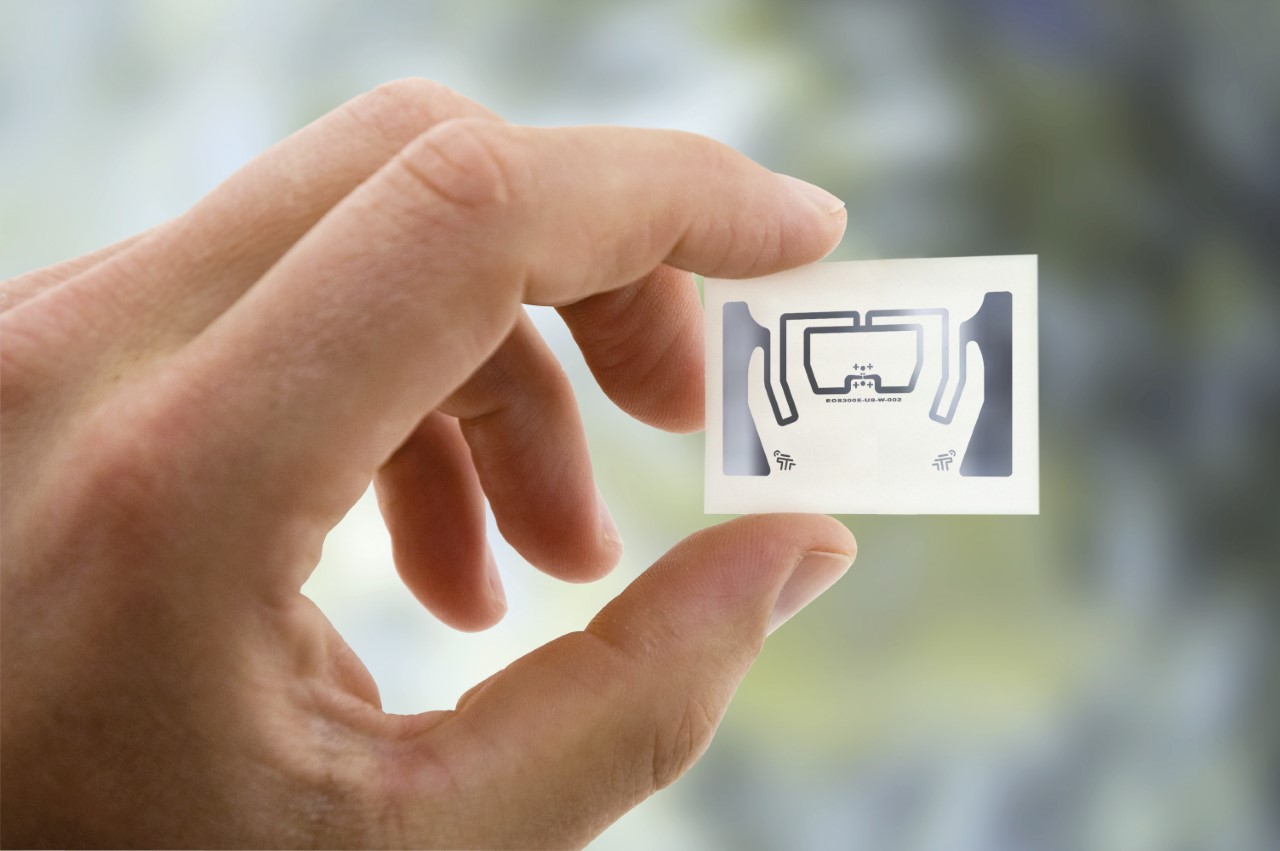
At Tageos, we believe that sustainability should be seen as a driver of innovation, not just a compliance measure. It is this philosophy that led to the development of our EOS Zero® product family, for example. The paper substrates used in these RFID inlays and tags are always FSC-certified and are designed to drastically reduce environmental impact compared to conventional inlay designs. According to an officially certified lifecycle analysis, our EOS Zero products significantly reduce the carbon footprint compared to products with ‘traditional’ aluminum antennas on PET substrates, while also preventing plastic waste.
It is Important to note that sustainability should not compromise performance. The future belongs to solutions that successfully combine environmental responsibility, production efficiency and operational excellence. For this reason, sustainability is integral to our product development, manufacturing and corporate strategy, including our publicly stated goal of achieving net-zero emissions by 2050.
Innovation Requires Investment
Ultimately, thought leadership is only ever measured by actions. Innovation requires infrastructure, expertise, confidence, and long-term commitment.
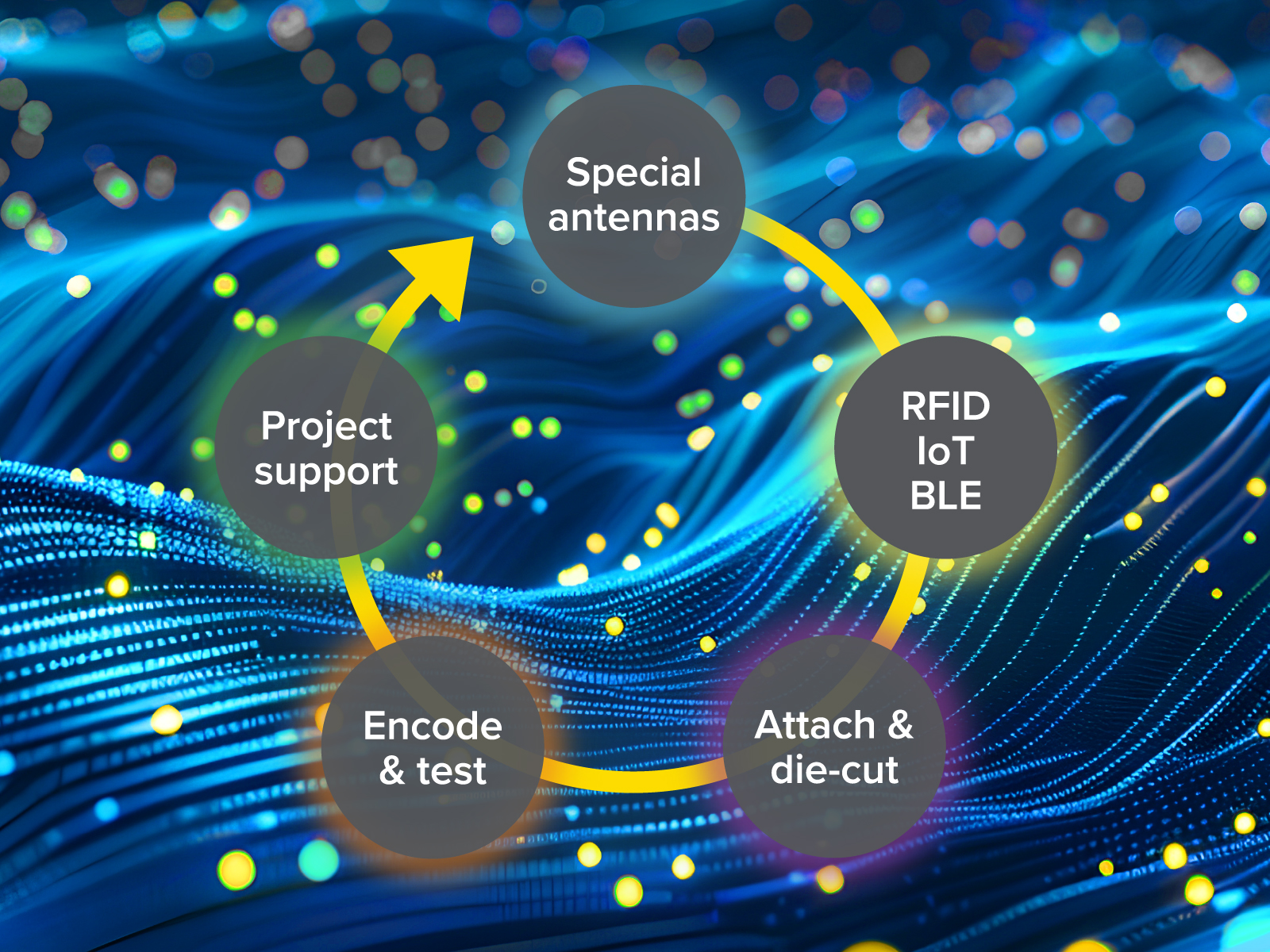 To drive the development of next generation inlays and tags, we opened our ‘Innovation Center of Excellence’ in Munich, Germany, in April 2025 This center brings together cutting-edge antenna design, specialty product development, rapid prototyping, testing capabilities and resources for close collaboration with customers. Our goal is clear: to enable and accelerate the journey from innovative ideas to market-ready products.
At the same time, many sectors, such as healthcare, logistics, the food industry, industrial manufacturing, aviation, and emerging IoT applications, are increasingly requiring customized products due to new applications and use cases. The Innovation Center of Excellence allows us to address and capitalize on these opportunities quickly, while maintaining the performance and reliability standards rightly expected of large-scale implementations.
Quality Drives Everything We Do
Although innovation and sustainability are important, we believe that quality is the cornerstone of successful RAIN RFID implementations. In large-scale programs, often millions of tagged products move through complex supply chains. Reliable, consistent high performance is essential.
Our involvement in key industry advisory boards, such as the RAIN Alliance’s ‘Manufacturing Quality’ working group, demonstrates our dedication to improving industry standards and best practices. This commitment is also reflected in our ARC Quality Certification at all our manufacturing sites and in our comprehensive portfolio of ARC-certified products. And our commitment extends beyond certification, too. Every shipped product undergoes rigorous quality testing, and our manufacturing processes consistently achieve exceptional high yield levels.
The Power of Collaboration
No single company can shape the future of technology alone. For us, progress depends on collaboration between chip suppliers, inlay manufacturers, label converters, service bureaus, system integrators, hardware and software developers, standards organizations and end-user companies from a variety of industries.
This is why active participation in industry organizations and associations is so important. These collaborations accelerate innovation and improve interoperability, contribute to the establishment of common standards that benefit the entire ecosystem. As RAIN RFID technology continues to converge with HF/NFC, BLE, sensors, cloud platforms, and artificial intelligence, the importance of collaboration within the ecosystem will further grow.
From Identification to Intelligence
The growing importance of RAIN RFID technology in creating product intelligence is perhaps the most exciting aspect of its future. Until now, RAIN RFID has been used to answer a relatively simple question: Where is my product?
However, tomorrow’s applications will be able to answer much more complex questions.
Where does this product come from?
What materials were used to manufacture it?
What is its environmental footprint?
How should it be repaired, reused or recycled?
How can consumers interact with it digitally?
The transition from identification to intelligence will transform the way products are designed, manufactured, sold, used and disposed of. RAIN RFID will play a central role in enabling this transformation.
A Look Into the Future
The next decade will probably be remembered as the period when RFID evolved from purely functional technology to become a fundamental part of the connected economy. In our view, three themes will significantly shape this development:
• Product digitization
• Sustainability by design
• Collaboration within the ecosystem
The future of RFID is therefore about more than ‘just’ tracking products; it’s about unlocking their digital potential. This could be the industry’s greatest opportunity yet.
At Tageos, our mission is to help shape this path through innovation, quality, sustainability and active participation in the global RAIN RFID community, with the aim of creating long-term value.