

For years, RFID was mainly associated with inventory counting and retail efficiency.
That is no longer the full picture.
Today, a RAIN RFID label can transform an ordinary product into a source of real-time intelligence — carrying data, enabling traceability and connecting the physical and
digital worlds in ways that are reshaping supply chains, retail operations and consumer experiences.
And increasingly, sustainability is at the center of that transformation.
The shift starts at the source. When RAIN RFID is integrated during manufacturing, products become visible from the very beginning of their journey. Brands and retailers gain a live view of inventory moving across factories, distribution centers and stores, allowing them to react faster and operate with far greater accuracy.
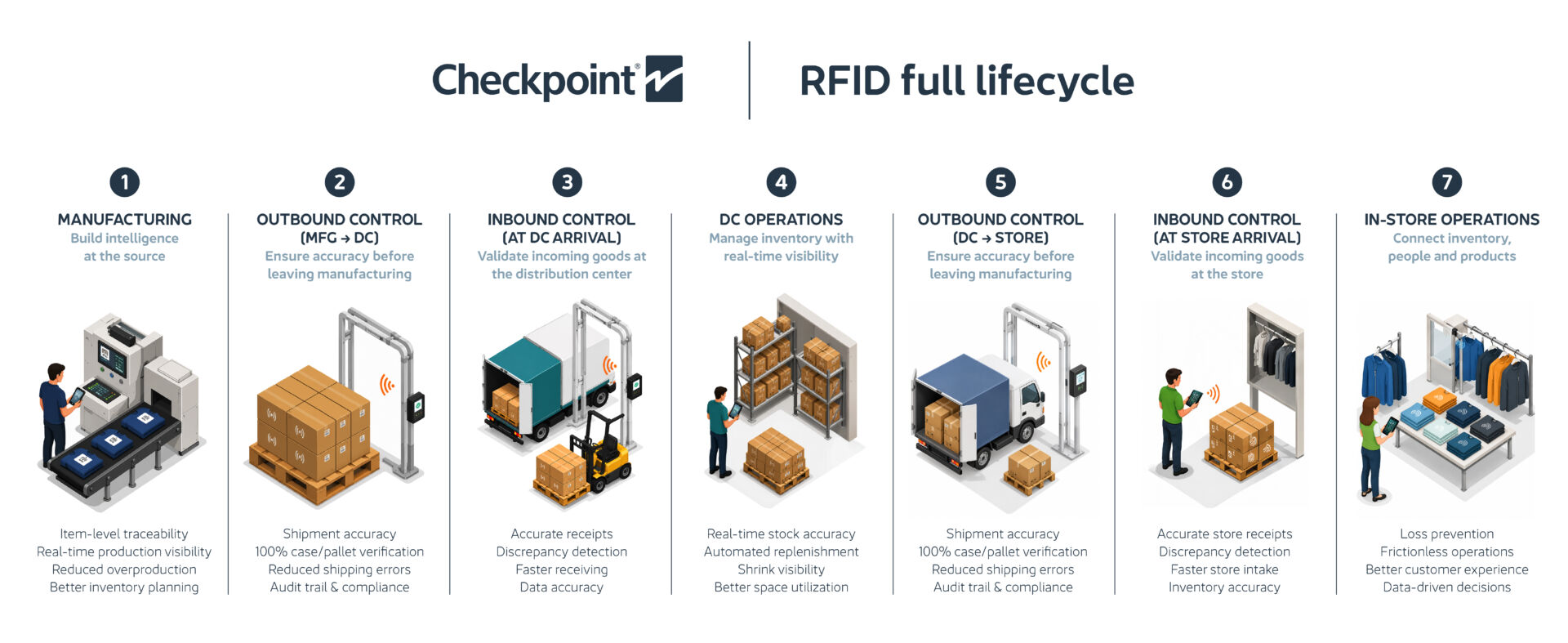
From our experience, the true value of RFID it not simply knowing where products are but using that information to make better business decisions.
Excess inventory, unnecessary replenishment and overproduction remain major challenges across multiple industries. Better data changes that equation. With reliable, item-level visibility, companies can make more informed decisions about what to produce, where to allocate stock and how to reduce avoidable losses throughout the supply chain.
In fresh food, the impact can be even more direct. RAIN RFID labels can carry expiration dates and traceability information, helping retailers improve stock rotation and reduce food waste before products ever reach the bin.
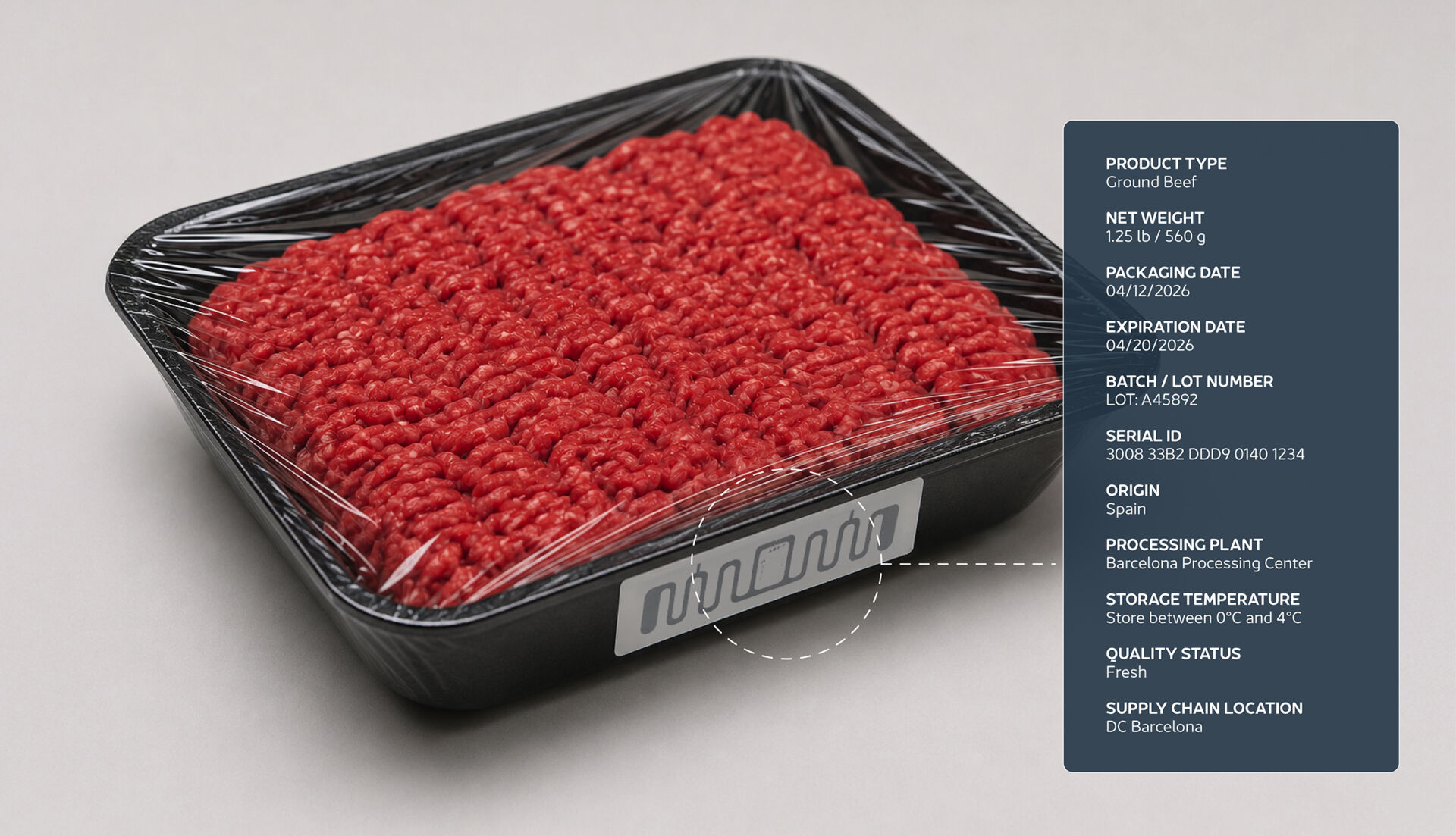
Increasingly, the value of this data extends beyond operational visibility. As organizations invest in Artificial Intelligence and machine learning, the quality of the underlying data becomes critical. In practice, AI is only as powerful as the information feeding it. RAIN RFID provides a trusted stream of real-time, item-level data that enables predictive capabilities across manufacturing, logistics and retail.
Rather than simply reacting to shortages, delays or demand fluctuations, companies can begin anticipating them. From predictive inventory imbalances and identifying bottlenecks to improving replenishment and reducing waste, the combination of RFID and AI is transforming visibility into predictive intelligence.
And the same logic extends beyond products themselves.
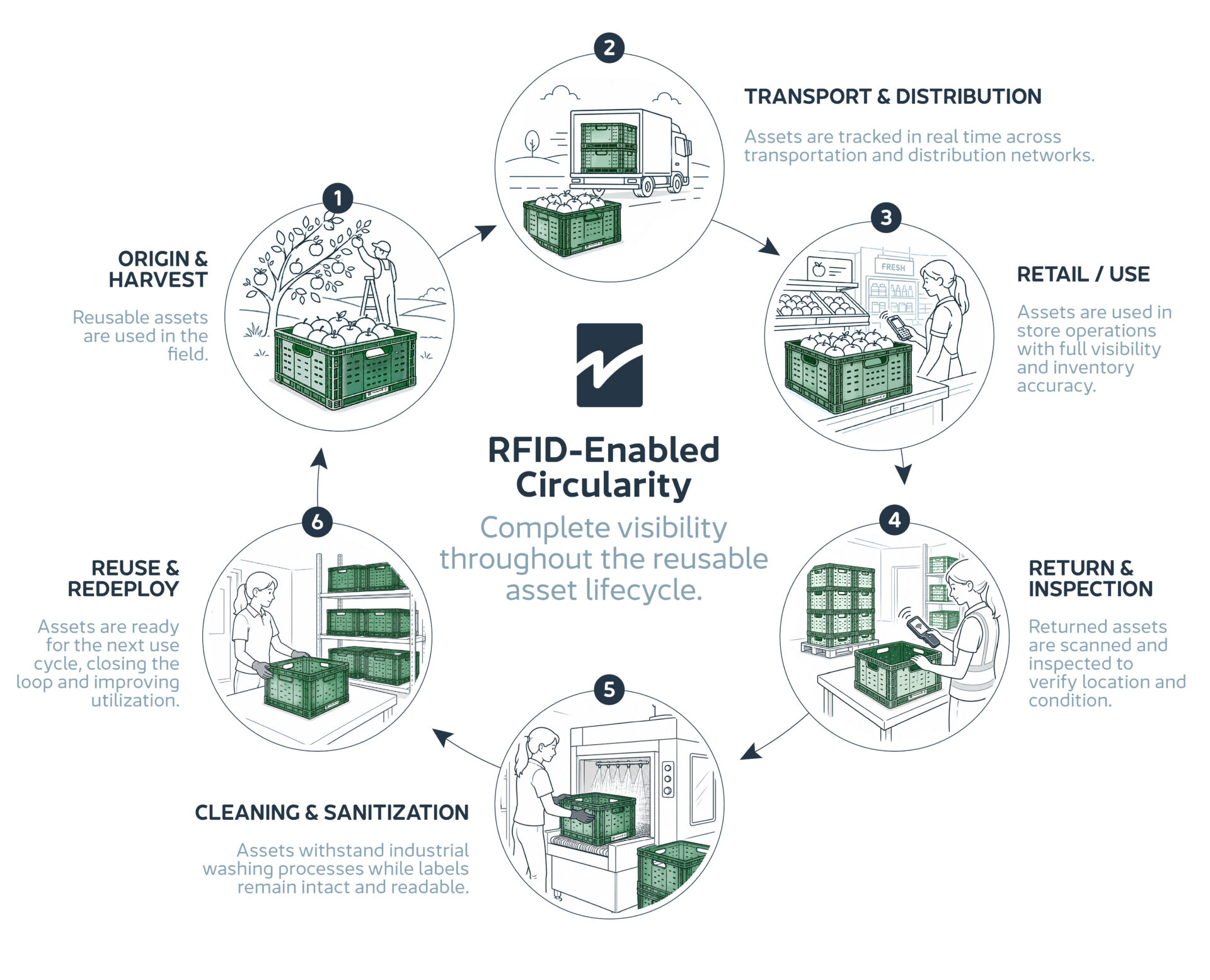
Returnable Transport Items — pallets, crates and reusable containers — are among the least visible but most important assets in modern logistics. Every year, companies absorb significant costs through misplaced assets, inefficient tracking and manual processes.
In practice, we see that many organizations still lack the level of visibility needed to fully benefit from circular logistics models. RAIN RFID changes that by giving businesses real-time visibility into reusable transport assets across the supply chain. The result is better asset utilization, fewer losses and stronger support for circular logistics models.
Retail loss prevention is evolving too.
Traditional anti-theft systems were built around alarms. RFID introduces intelligence into the equation. Retailers can now identify exactly which items are leaving stores unpaid, gain more precise data on shrink patterns and reduce false alarms that negatively affect the customer experience.
At the same time, RFID is becoming part of frictionless checkout environments, including self-checkout and grocery retail.
But perhaps one of the most interesting developments is happening on the consumer side.
By combining RAIN RFID for item intelligence with NFC for consumer interaction, brands can turn products into direct digital touchpoints. A single tap with a smartphone can unlock authentication, product origin, sustainability information, care instructions or exclusive brand experiences.

In a market where consumers increasingly demand transparency and authenticity, that connection matters.
And it is about to become even more important.
The arrival of the Digital Product Passport is pushing companies — especially in the textile sector — towards a new era of traceability and compliance. Products will need to carry accessible digital records covering everything from material composition to repairability and environmental impact.
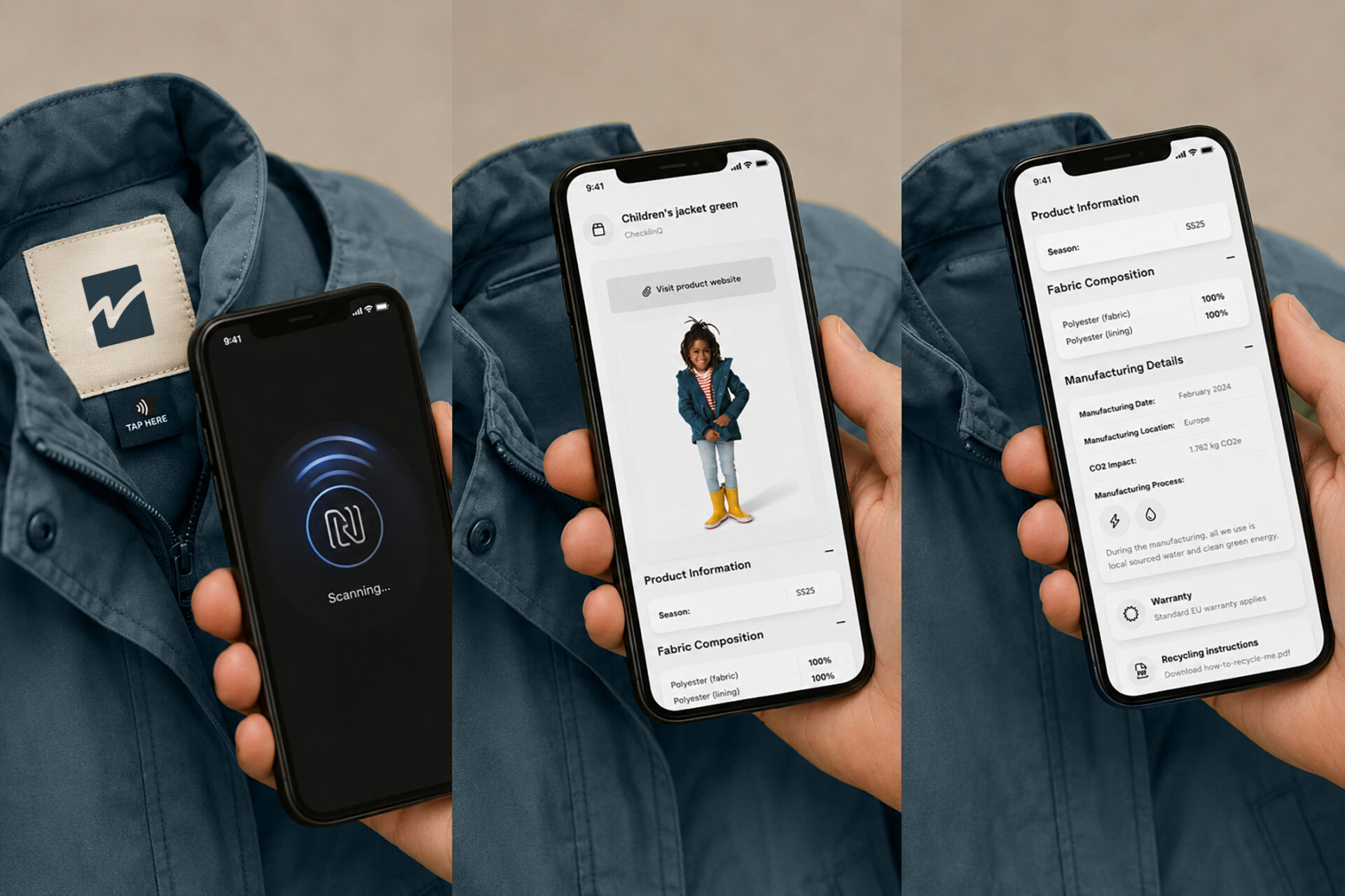
From our perspective, the Digital Product Passport marks a broader shift. Product intelligence is moving from being a competitive advantage to becoming a business requirement.
At the same time, regulatory developments are reinforcing the role of RFID in supporting circularity. Under the European Packaging and Packaging Waste Regulation (PPWR), RFID tags are not considered packaging because they are considered digital identifiers rather than packaging components. Their purpose is not to contain, protect or transport products, but to provide access to information and traceability throughout the product lifecycle.
This distinction highlights an important shift in how the industry views connected products. RFID is increasingly recognized as an enabler of circularity, supporting reuse models, Digital Product Passports, and assisting with more efficient recycling processes and greater transparency across value chains.
Companies that wait for regulations to force change may find themselves playing catch-up. Those investing today in connected products and data-driven operations will be better positioned to navigate future requirements and capture new opportunities.
Because the conversation around RFID is no longer just about operational efficiency.
It is about creating smarter, more transparent and more sustainable ecosystems where every product carries intelligence — and every interaction generates value.
As supply chains become more connected and expectations around transparency continue to rise, one thing is becoming increasingly clear: the future belongs to products that can tell their story.
These are exactly the kinds of opportunities and challenges that the industry will continue to explore at RAIN in Action Madrid. We look forward to continuing the conversation there.