
European regulation is about to mandate a permanent digital identity for every textile sold on the continent. Here is what that means for retailers, brands, and consumers — and why RAIN RFID is the technology built to make it happen.
A Digital Product Passport for Every Piece of Clothing
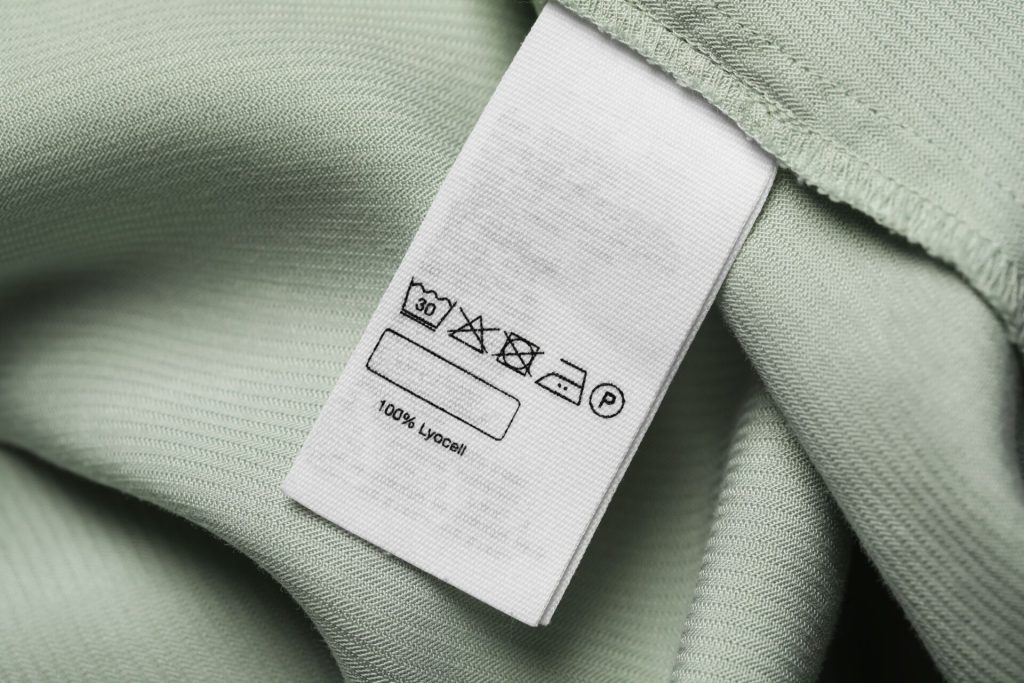
Somewhere in your wardrobe is a garment with a small woven label. It tells you the fabric composition, the care instructions, and perhaps the country of manufacture. It has looked more or less the same for decades.
That label is about to be transformed.
Under the European Union’s Ecodesign for Sustainable Products Regulation — known as ESPR — every textile sold on the EU market will soon be required to carry a Digital Product Passport: a persistent, machine-readable data carrier containing a globally unique identity that links to more verified information about the product’s materials, environmental impact, supply chain, repairability, and end-of-life options.
The delegated act defining the specific data carrier requirements for textiles is expected in 2027, following the framework already established for batteries, which becomes mandatory in February of that same year. For retailers and brands selling into the EU, the compliance window is shorter than it appears.
The Digital Product Passport is not a paper certificate. It is a live, verifiable digital record — and it must stay available for the product’s entire lifetime.
What the Regulation Actually Requires
A Digital Product Passport is accessed through a data carrier — a physical, machine-readable identifier attached to or embedded in the product. Think of it as the bridge between the physical garment and its digital record.
The regulation requires that this data carrier be:
- Persistent: it must remain with the product throughout its entire lifecycle, from manufacturing to resale to recycling.
- Globally unique: each product must carry a product identifier on the data carrier that is globally unique for the product model, batch, or item. The granularity is yet to be decided by the European Commission in further legislation, the “delegated acts”.
- Machine-readable: it must be machine-readable by consumers, market-surveillance, sorters, recyclers and all relevant stakeholders in the product’s life.
Several data carrier technologies are under consideration within the CEN/CENELEC standardisation process, but one stands out as particularly well-suited to the demands of the textile industry, RAIN RFID.
Why RAIN RFID Is the Natural Fit for Textile DPPs
RAIN RFID is already listed as a permitted data carrier in the draft CEN/CENELEC JTC24 DPP standard. It is, in many respects, purpose-built for what the regulation demands. RAIN technology is also already the technology of choice across the retail and apparel sector, with significant infrastructure already in place and firm roadmap commitments to expand it further — meaning for many brands and retailers, the foundation for DPP compliance is already built.
Unlike barcodes, which require line of sight, light and individual scanning, RAIN RFID tags can be read:
- Without light / line of sight — through fabric, packaging, or boxes
- In bulk — hundreds of items simultaneously, in seconds
- At distance — across a warehouse, fitting room, or sorting facility
- Without batteries — passively and sustainably, drawing power from the reader itself
- After repeated industrial laundering — durable enough to survive the full product lifecycle
That last point is critical. A textile DPP tag is not a supply chain tag to be removed at the point of sale. It must survive washing, dyeing, ironing, years of consumer use, and ultimately be readable at the end of the textile’s life — whether that means sorting for recycling or authentication for resale.
Form Factors: Where Does the Tag Actually Go?
For a garment RAIN RFID tag to meet DPP requirements, it must be integrated in a way that ensures it remains with the item permanently. Three primary form factors are emerging as the industry standard:
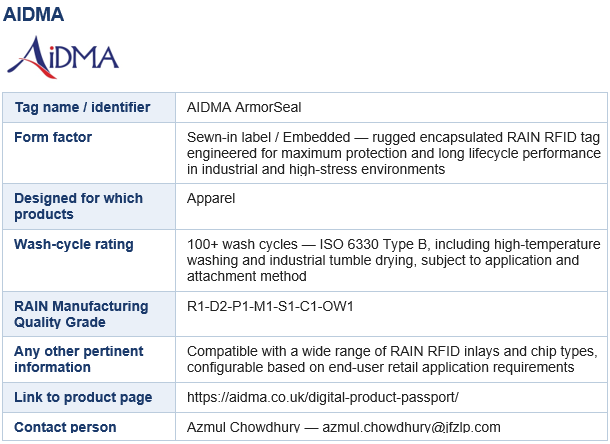
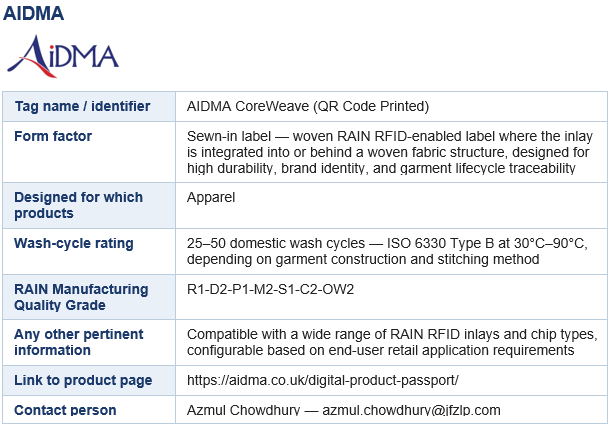
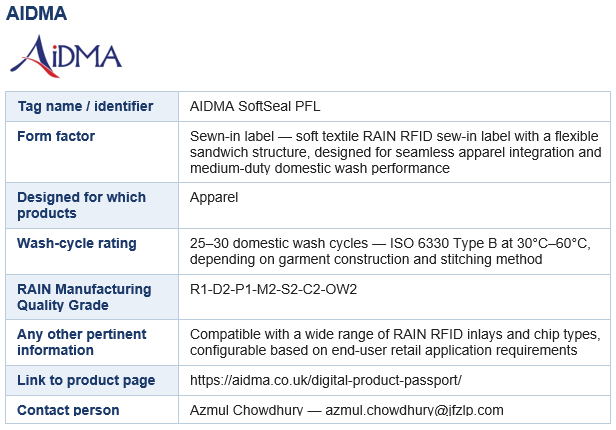
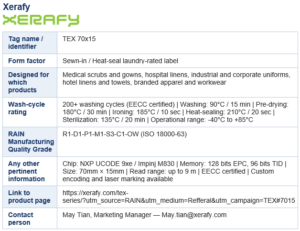
- Sewn-in labels: RAIN RFID inlays integrated into woven or printed labels that are permanently sewn into the garment — typically at the neckline or hem. This is the most established format, already widely deployed for inventory tracking, and well understood by garment manufacturers.
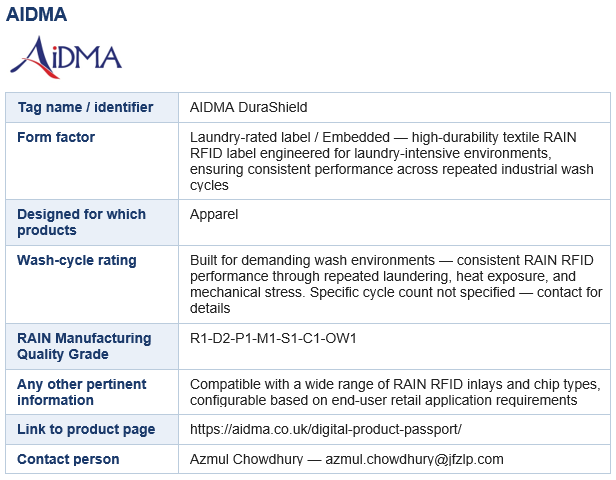
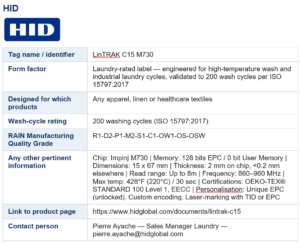
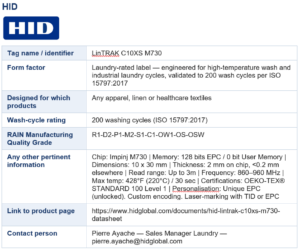
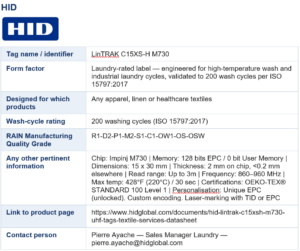
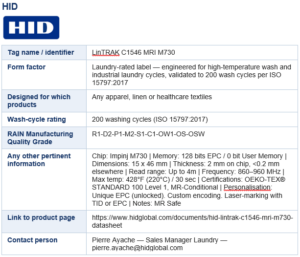
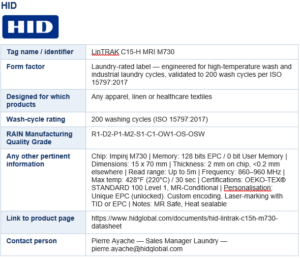
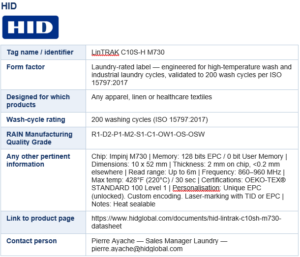
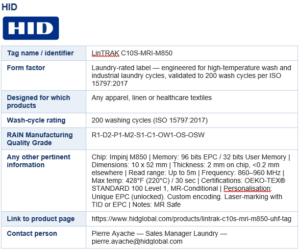
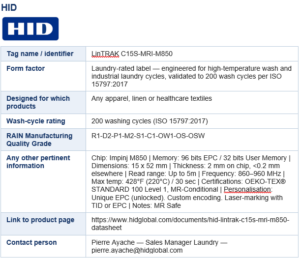
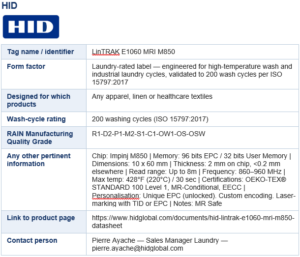
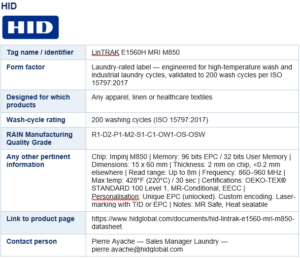
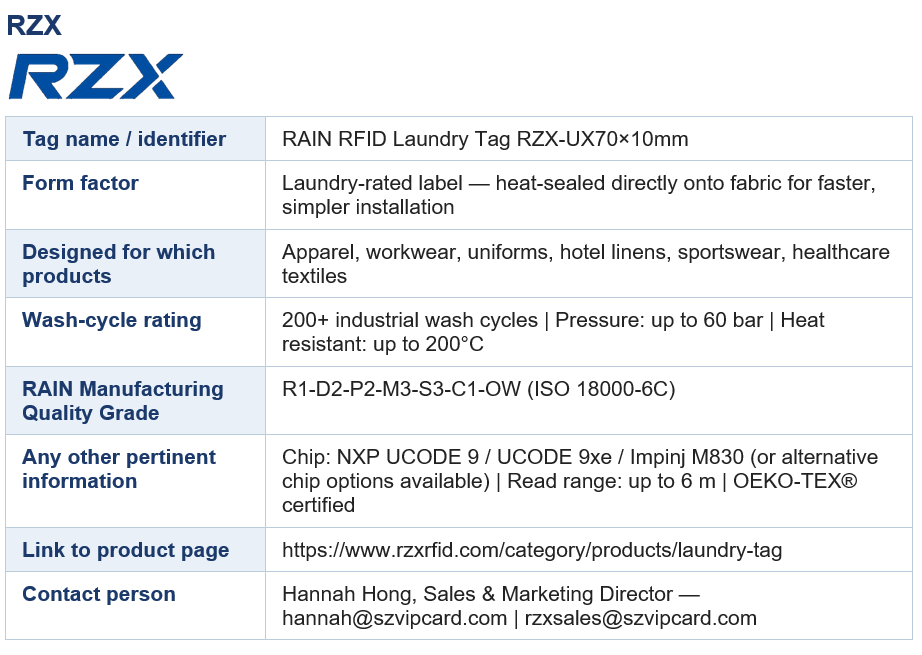
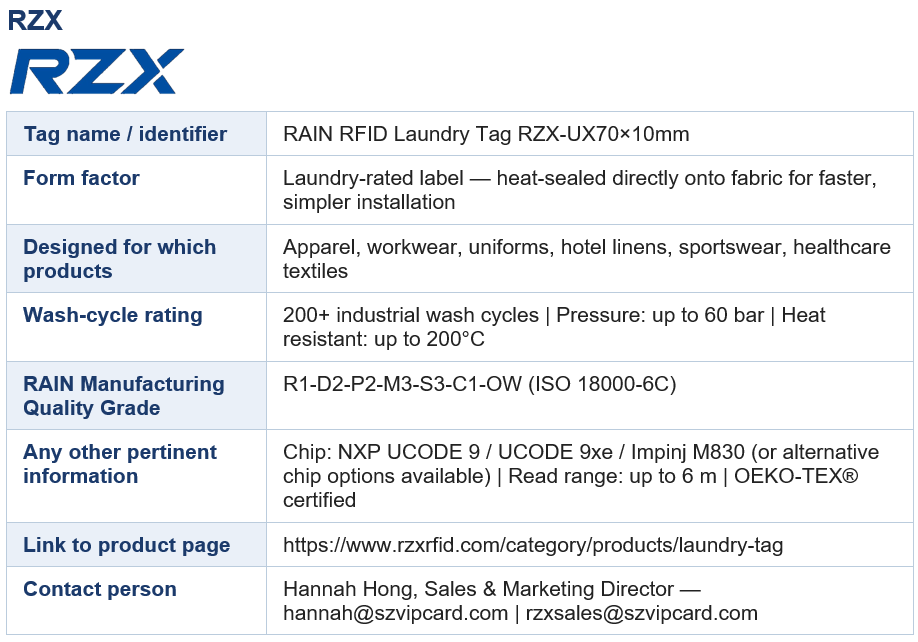
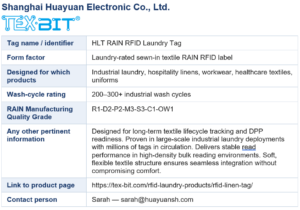
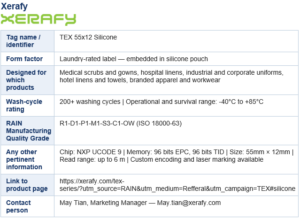
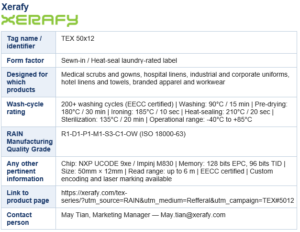
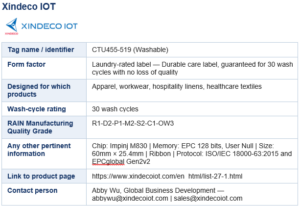
- Laundry-rated labels: Specifically engineered for high-temperature wash and tumble-dry cycles, including the rigours of industrial laundry environments. These tags are validated to maintain read performance across hundreds of wash cycles — meeting the durability threshold a lifetime data carrier demands.
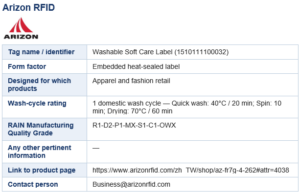
- Embedded tags: The most seamless option: the RFID inlay is encapsulated within the textile substrate itself during manufacturing, with no separate label component. The tag becomes an invisible, inseparable part of the fabric — indistinguishable to the touch, unremovable by the consumer. This form factor is attracting significant interest from brands seeking a premium, label-free implementation.
Each form factor has its appropriate application — the choice will depend on the garment type, price point, brand positioning, and supply chain complexity. What they share is suitability for a lifetime of use.
Compliance Is the Floor. The Opportunity Is Much Higher.
It would be a strategic mistake to think of Digital Product Passports purely as a compliance exercise. The regulation is, in effect, mandating an infrastructure upgrade, and the companies that understand this early will extract significant competitive value from it.
The Circular Economy Opportunity
When every garment has a digital identity, the economics of circularity change fundamentally. Sorting facilities can read RAIN tags at high speed without line of sight, instantly identifying a garment’s material composition and directing it to the correct recycling stream — a step-change from manual or optical sorting that is slow, expensive, and error-prone.
Second-hand platforms gain access to verified provenance, authenticity, and composition data, enabling more trusted resale markets and reducing counterfeiting. Repair services can access care and material data instantly. Rental and product-as-a-service models become operationally viable for garment categories where they were previously too complex to manage.
The Consumer Transparency Opportunity
Consumer expectations around sustainability transparency are rising sharply — and the DPP framework, combined with the eventual readability of RAIN tags via consumer smartphones, creates a direct channel between the garment and the person wearing it. Brands that use this channel well — to tell the story of a garment’s origins, certifications, second-hand value, and end-of-life options — will differentiate themselves in a market where sustainability claims are increasingly scrutinised.
The Inventory and Operations Opportunity
For retailers already using RAIN RFID for inventory management or loss prevention, and many major retailers are, the DPP transition represents an extension of existing infrastructure rather than a rebuild. The same tags that enable item-level inventory accuracy at the store shelf will carry the product’s digital passport. This convergence of operational efficiency and regulatory compliance is a compelling argument for brands and retailers evaluating their DPP strategy.
The Customer Engagement Opportunity
Item-level tagging doesn’t just improve what happens behind the scenes, it transforms what happens on the sales floor. A fitting room that knows what a customer is trying on can recommend complementary products, check size availability, or offer styling suggestions in real time, turning routine browsing into a more personalised experience and shifting store associates from searching to serving.
The Timeline: When Does This Become Mandatory?
The ESPR rollout is phased across product categories, with each category governed by its own delegated act — the document that will define exactly what information a DPP must contain, which data carriers are permitted, and what technical specifications they must meet. The schedule looks like this:
- 2026: Delegated act expected for iron and steel.
- February 2027: Battery DPP becomes mandatory — the first hard deadline.
- 2027: Delegated act expected for textiles and tyres — this is when the specific data carrier requirements for garments will be formally defined.
- 2028–2030: Furniture, chemicals, mattresses, detergents, toys, construction, and further categories.
Once a delegated act is published, companies typically receive an 18-month transition period before mandatory compliance. For textiles, that places the practical compliance deadline in the 2028–2029 range — but the supply chain changes required mean that preparation must begin well in advance.
Beyond the EU, comparable frameworks are advancing in Canada, California, the UK, Japan, China, and through the United Nations (UN/CEFACT Recommendation 49). Digital product traceability is becoming global infrastructure. Companies building DPP-compatible systems today are positioning themselves for multi-market regulatory alignment, not just EU access.
Lifetime-Ready Textile Tags
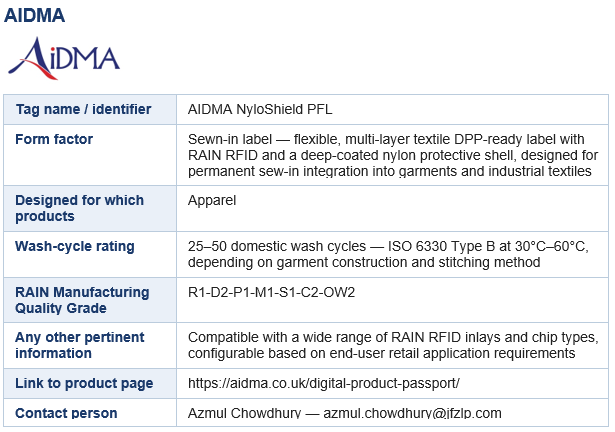
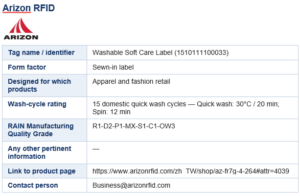
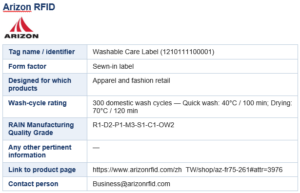
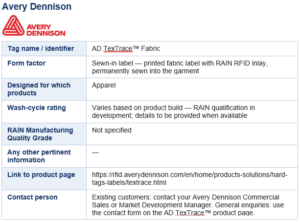
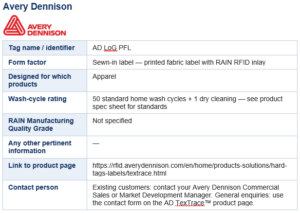
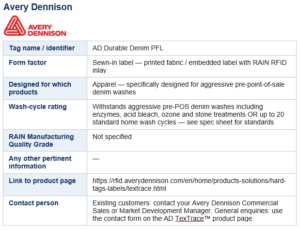
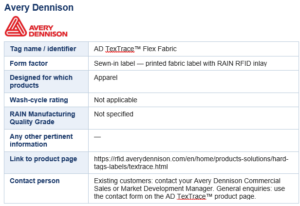
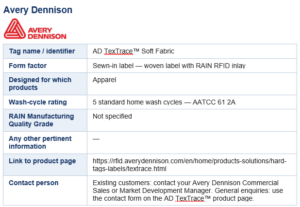
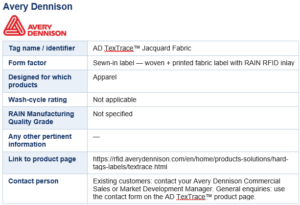
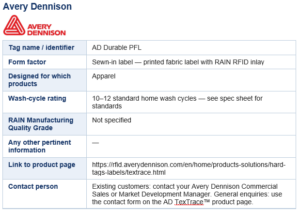
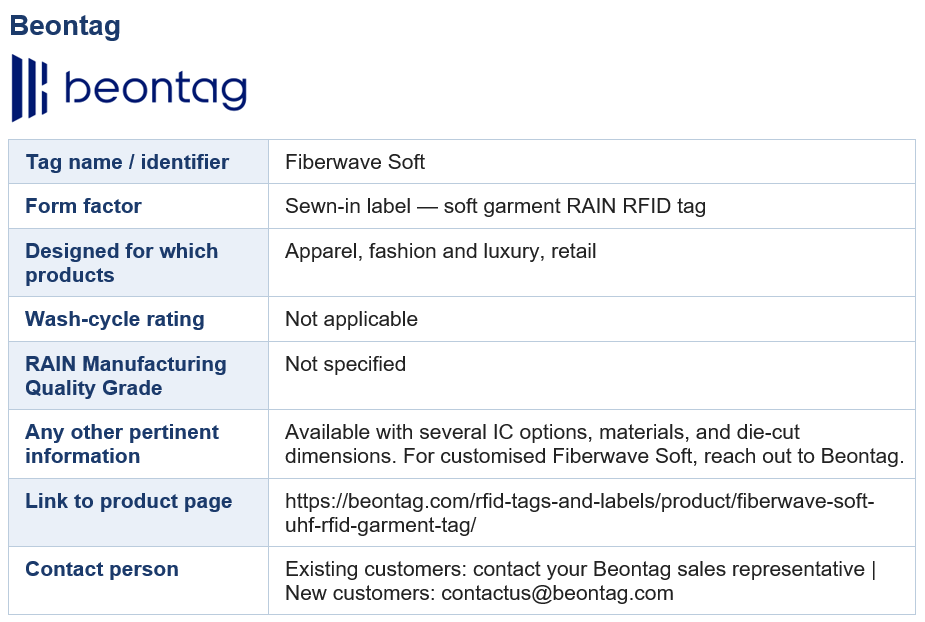
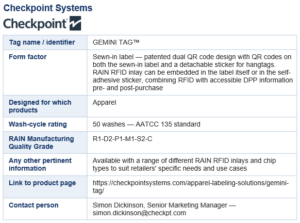
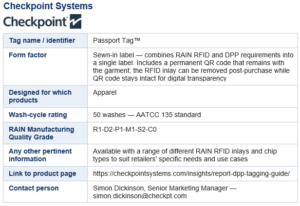
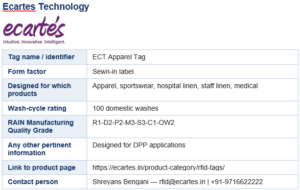
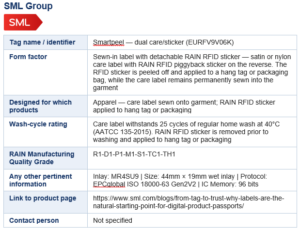
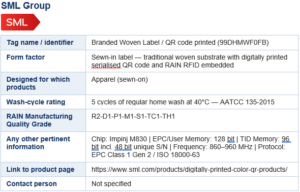
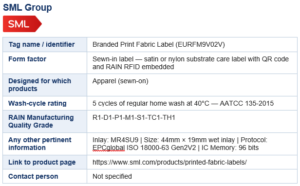
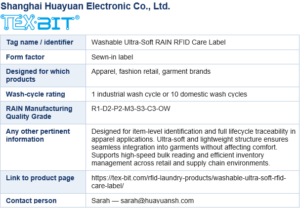
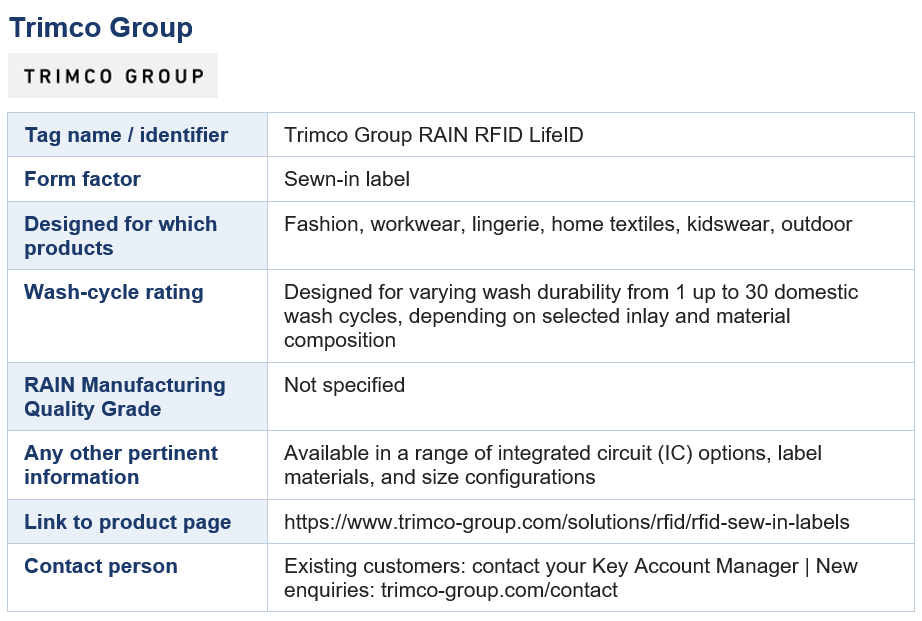
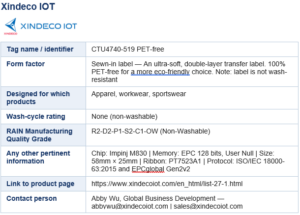
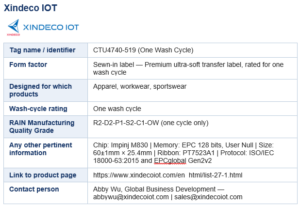
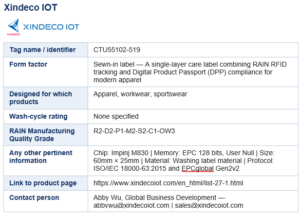
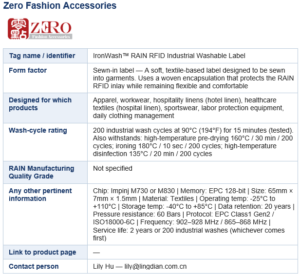
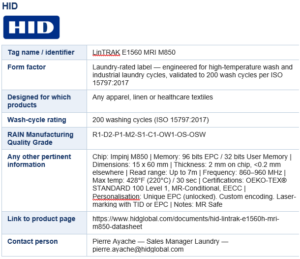
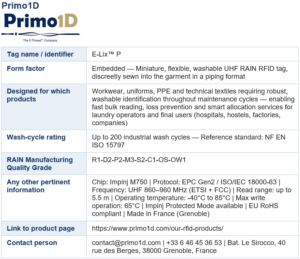
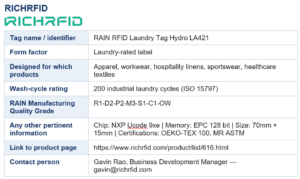
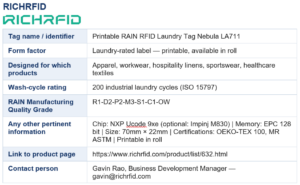
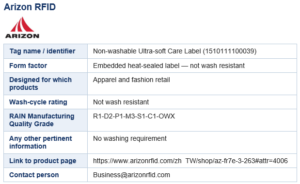
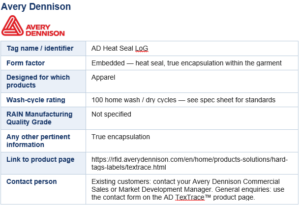
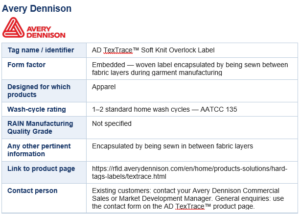
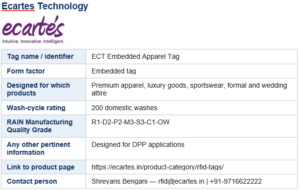
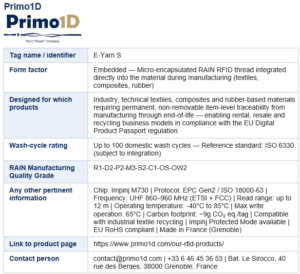
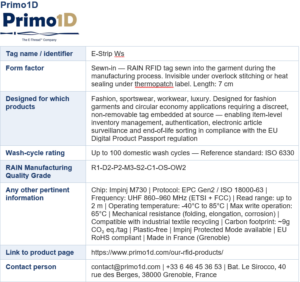
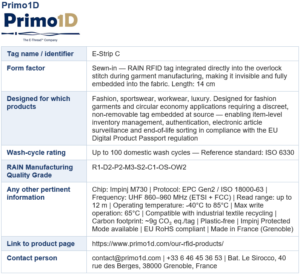
If you’re a brand or retailer starting to think about your DPP data carrier strategy, this is a good place to start. Every RAIN Alliance member below makes tags designed to stay with a textile product for its entire life — the form factors, which products each tag is designed for, durability ratings, and contact details are all here.
Sewn-In Labels
RAIN RFID inlays integrated into woven or printed labels that are permanently sewn into the garment — the most established form factor, widely deployed and well understood by garment manufacturers worldwide.
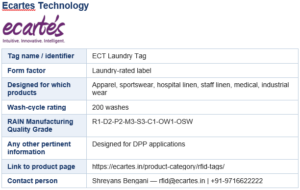
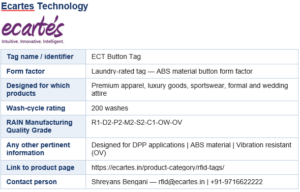
Laundry-Rated Labels
Specifically engineered and validated for high-temperature wash and industrial laundry cycles. These tags maintain read performance across hundreds of wash cycles — the durability benchmark for lifetime data carriers in workwear, hospitality, and healthcare textiles.
Embedded Tags
The RAIN RFID inlay is encapsulated within the textile substrate itself during manufacturing — no separate label, invisible to the consumer, and inseparable from the fabric. The premium, label-free option for brands seeking seamless DPP implementation.

What Retailers and Brands Should Be Doing Now
The decisions being made in 2026 — in standards committees, in procurement teams, and in technology partnerships — will define which organisations lead and which ones scramble to catch up. The questions worth asking now are straightforward:
- Are our current garment tags suitable for lifetime use — through washing, use, and end-of-life?
- Do we have item-level serialisation in our supply chain, or only product-level identification?
- Is our supply chain data structured in a way that can be surfaced through a Digital Product Passport?
- Are we engaging with the standards process that will define what compliance looks like for our product categories?
The technology exists. The standards are being written. The deadlines are set. For retailers and brands selling into the EU, the question is no longer whether Digital Product Passports will affect their business — it is how well-prepared they will be when they do.