
 For years, RAIN RFID has been deployed across different levels of the supply chain, each addressing a specific operational need. Pallet-level tagging has enabled bulk tracking and logistics visibility. Carton-level RFID has improved routing, consolidation, and handling efficiency. Meanwhile, item-level tagging has transformed inventory accuracy and product traceability.
These approaches are not new. They already exist, and many companies have been successfully using them in parallel, often in isolation. What is changing now is not the technology itself, but how it is understood and combined.
The industry is evolving from isolated applications to a more integrated perspective, where item, carton, and pallet data are no longer independent layers, but part of the same operational logic. The question is no longer which level to tag, but how to connect them in a way that ensures consistency, validation, and trust across the entire flow.
In this context, RFID is no longer just an identification technology. It becomes a tool for data coherence.
According to RAIN Alliance, this multi-layer adoption is already a reality. RFID is being deployed across items, cartons, and pallets, enabling seamless data capture without line-of-sight throughout the supply chain. This evolution is also reflected in its scale: in 2025 alone, 42.7 billion RAIN RFID tag chips were shipped globally.
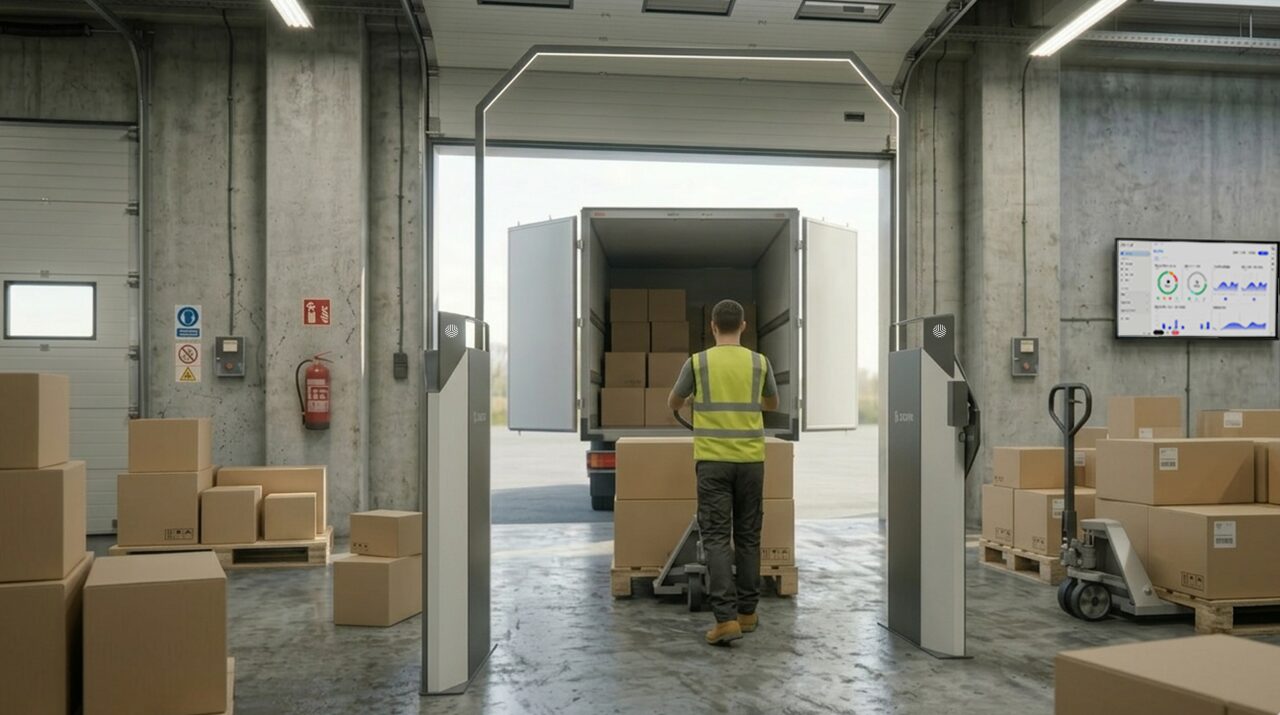
This shift brings focus to a critical operational point: the loading dock.
“The dock is no longer just a transition point in the warehouse. It’s the last moment where you can confirm that what has been prepared is exactly what is being shipped,” explains Luis Rius, CEO of Clustag.
In high-volume environments, where speed and operational pressure leave little room for manual checks, this moment evolves from a simple operational step into a key control point. The question is no longer just about visibility, but about being able to fully trust the data behind every shipment.
The loading dock as the “moment of truth”
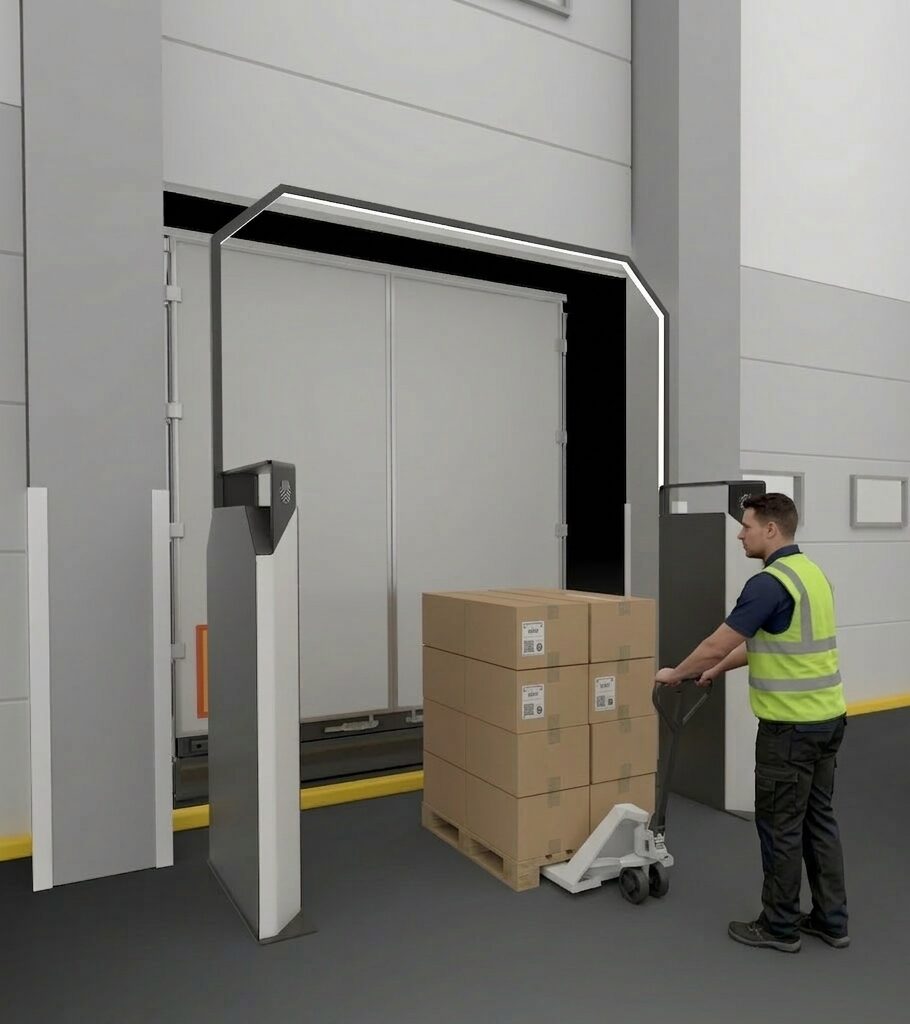 In many distribution centers, advanced systems coexist with a persistent gap. Processes such as picking, packing or sorting may be automated, yet at the loading dock validation often still relies on manual or barcode-based checks.
This leads to familiar issues: pallets loaded onto the wrong truck, incomplete shipments, or dispatches through the wrong dock. These errors are often detected only after departure, when correction is no longer possible.
As a result, the loading dock is no longer just a handover stage, but a true decision point where system plans meet operational reality.
From item-level to carton-level validation
Item-level RFID has given companies granular visibility into what is inside each carton and pallet. At the same time, carton-level tagging allows operations to move faster and take decisions at scale.
This combination enables businesses to operate with precision at item level and efficiency at carton level, while also unlocking a new capability: validating shipments before they leave the warehouse.
This shift is already visible in leading logistics networks. UPS, for example, is moving toward RFID-enabled environments where parcels are automatically detected as they move through facilities, reducing reliance on manual scanning and enabling earlier detection of errors such as misloads.
As operations evolve, the focus moves from capturing data to using it in real time to ensure shipment accuracy.
RAIN RFID Portal: validating shipments in motion
This is where the concept of an RFID Portal fits into the broader trend.
The system acts as a hands-free validation layer at the loading dock, reading pallets and cartons in motion and verifying their composition in real time before dispatch.
Typical use cases include:
- ensuring that only planned pallets are loaded
- confirming pallet composition
- detecting incomplete shipments at carton level
- leveraging item-level data, when available, to validate content consistency
In this approach, the dock becomes a final checkpoint where shipment data is automatically captured and cross-checked against the warehouse system, without interrupting operations.
“The real value of RFID is not just identifying products. It’s making decisions based on reliable data in real time, especially at critical points like the dock,” notes Rius.
Companies are looking to eliminate the gap between what systems indicate and what happens on the warehouse floor. The loading of the dock remains one of the most critical points to close that gap.
“If you can’t trust dispatch data, the entire process loses value. The challenge is no longer to see more, but to rely on what you see,” concludes Rius.
In this context, RAIN RFID Portals are not just another read point. They represent a shift toward data-driven validation at the edge of operations, aligned with broader trends in automation, real-time visibility and connected supply chains.
RAIN RFID started as an identification technology. Increasingly, it is becoming the foundation for reliable, decision-ready data, and the loading dock is where that transformation becomes most visible.